Preparing for DISE isn’t about checking a single compliance box. It requires organizations to evaluate whether their financial reporting processes can produce the detailed expense information required under ASU 2024-03.
Rather than waiting until implementation begins, finance teams can use this readiness checklist to identify gaps, prioritize improvements, and strengthen reporting processes before the new requirements take effect.
What Is Disaggregation of Income Statement Expenses?
Disaggregation of Income Statement Expenses (DISE) is a new financial reporting requirement introduced through FASB ASU 2024-03. It requires public companies to provide additional detail about certain operating expenses in the footnotes to their financial statements, giving investors greater insight into a company’s cost structure.
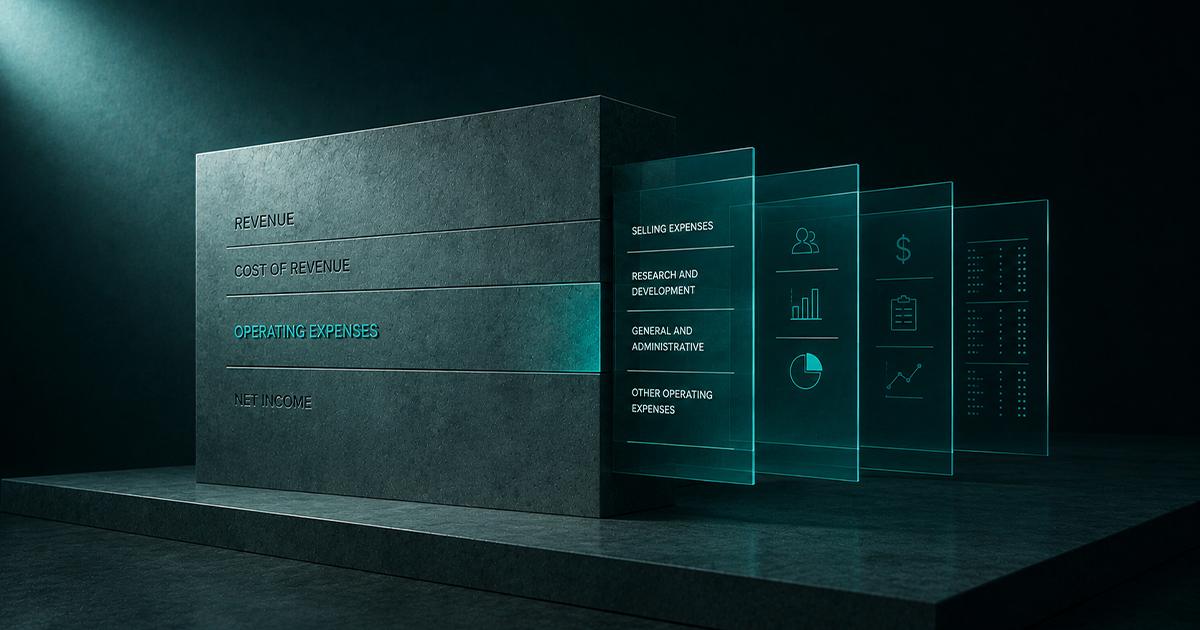
Importantly, DISE does not change how expenses are presented on the income statement. Instead, it expands the information disclosed in the accompanying notes by breaking broad expense categories into more meaningful components, such as employee compensation, inventory purchases, depreciation, and amortization.
The objective is to improve transparency and help investors better understand how companies incur and manage operating costs when evaluating financial performance.
Why Public Companies Should Prepare Early
Although the new disclosure requirements do not take effect immediately, implementation may require significant preparation. Many organizations will need to evaluate whether their accounting systems, reporting processes, and internal controls can capture expense information at the level of detail required under ASU 2024-03.
Preparation for Disaggregation of Income Statement Expenses also extends beyond the accounting department. Finance teams may need to coordinate with Human Resources, Procurement, Operations, and Information Technology to collect, validate, and report the required information accurately.
The Committee of Sponsoring Organizations of the Treadway Commission (COSO) emphasizes that effective internal controls are fundamental to producing reliable financial reporting.1 Strengthening these controls now can help organizations prepare for DISE while improving reporting quality across the business.
DISE Readiness Checklist
Preparing for DISE requires more than understanding the guidance. Finance teams should begin gathering documentation and evaluating reporting processes well before the effective date to identify gaps and reduce implementation challenges.
☐ Review Your Expense Classifications
The first step is understanding how expenses are currently classified throughout your organization. Under DISE, companies will need to separately disclose categories such as employee compensation, inventory purchases, depreciation, amortization, selling expenses, and other significant operating expenses.
If these costs are currently grouped into broad general ledger accounts, producing the required disclosures may become a manual and time-consuming exercise.
Begin by reviewing your general ledger, trial balance, income statement, expense mapping schedules, and departmental expense reports. Identify where each required expense category is recorded and determine whether additional account detail or reporting dimensions are necessary.
If finance personnel cannot quickly identify these expenses today, they will likely encounter reporting challenges when DISE becomes effective.
☐ Evaluate Your Chart of Accounts
Your chart of accounts serves as the foundation of financial reporting. A chart of accounts designed primarily for external financial statements may not provide enough detail to support the expanded disclosures required under DISE.
Review your chart of accounts, account descriptions, account mapping documentation, and financial reporting hierarchy. Look for accounts that combine multiple expense types into a single balance, such as payroll, professional fees, software subscriptions, and consulting costs.
Separating these accounts before implementation will reduce manual adjustments, improve reporting accuracy, and make future disclosures significantly easier to prepare.
☐ Assess Your Accounting Systems
Even a well-designed chart of accounts may not be sufficient if your accounting system cannot produce the required reports efficiently. Many organizations rely on manual spreadsheets to supplement ERP reports, increasing the risk of errors and inconsistencies.
Evaluate your ERP system, financial reporting software, business intelligence dashboards, and reporting modules. Determine whether they can generate expense information by natural category without extensive manual intervention.
If additional customization, reporting tools, or system upgrades are required, beginning those projects early will provide adequate time for testing before implementation.
☐ Review Expense Allocation Methods
Many expenses are shared across multiple departments or business units. Payroll, rent, utilities, information technology, insurance, and shared service costs are often allocated using internal methodologies that may not have been designed with DISE reporting in mind.
Review your allocation policies, allocation schedules, supporting calculations, and management approval documentation. Confirm that allocation methodologies are consistently applied, well documented, and supported by objective data.
Investors and auditors expect expense allocations to be reasonable, repeatable, and capable of being substantiated if questioned during financial reporting reviews.
☐ Strengthen Internal Controls
Producing more detailed disclosures also increases the importance of strong internal controls. Errors in expense coding, inconsistent approvals, or weak review procedures can affect the accuracy of the information presented in the financial statement footnotes.
Review your internal control documentation, expense coding policies, approval workflows, account reconciliation procedures, month-end close checklists, and management review controls.
Pay particular attention to controls surrounding manual journal entries and expense reclassifications, as these areas often become sources of reporting inconsistencies. Well-designed controls not only support compliance but also improve the overall quality of financial reporting.
☐ Coordinate Across Departments
DISE implementation extends well beyond the accounting department. Much of the required information originates from other functions, making cross-functional collaboration essential.
Meet with leaders from Human Resources, Procurement, Operations, Information Technology, and Payroll to identify where supporting data resides and who is responsible for maintaining it.
Establish clear reporting responsibilities, documentation standards, and reporting deadlines early. Creating a cross-functional implementation team can significantly reduce confusion as the effective date approaches.
☐ Update Financial Reporting Procedures
Existing reporting procedures may need to be revised to accommodate the additional disclosures required under DISE. Waiting until year-end reporting begins may create unnecessary pressure on finance teams and increase the likelihood of reporting errors.
Review your month-end close calendar, financial reporting procedures, footnote preparation process, disclosure checklists, and management review process. Update these procedures to incorporate the new disclosure requirements and document any changes so reporting remains consistent across future reporting periods.
☐ Conduct a Trial Run
One of the most effective ways to prepare for DISE is to complete a practice disclosure before implementation becomes mandatory. A trial run allows organizations to evaluate their readiness without the pressure of regulatory filing deadlines.
Using a recent reporting period, prepare a mock DISE footnote supported by your general ledger, trial balance, expense schedules, and financial statement workpapers. Review the results with finance leadership and identify any missing information, manual workarounds, system limitations, or documentation gaps.
Addressing these issues during a trial run is often far less disruptive than discovering them during your first required filing.
Benefits Beyond Compliance
Although DISE introduces new disclosure requirements, the benefits extend well beyond regulatory compliance. Preparing for the guidance can also strengthen internal reporting and provide management with greater visibility into operating costs.
Organizations that invest in stronger reporting processes may also benefit from:
- Better visibility into cost drivers across the business
- More consistent financial reporting
- Improved decision-making through more detailed expense data
- Greater confidence among investors and other stakeholders
- Stronger internal controls and documentation practices
By viewing DISE as an opportunity to improve financial reporting rather than simply satisfy a new accounting standard, companies can create lasting value that extends beyond the effective date.
Preparing for DISE with Confidence
Every public company has a different starting point, and preparing for DISE often requires updates to reporting processes, accounting systems, internal controls, and financial disclosures.
Wahl Street Accountancy Corporation works alongside finance teams to assess reporting readiness, identify process gaps, and develop practical implementation strategies that simplify compliance while strengthening the quality and transparency of financial reporting.
Reference
- Committee of Sponsoring Organizations of the Treadway Commission (COSO), Guidance on Internal Control, https://www.coso.org/guidance-on-ic.