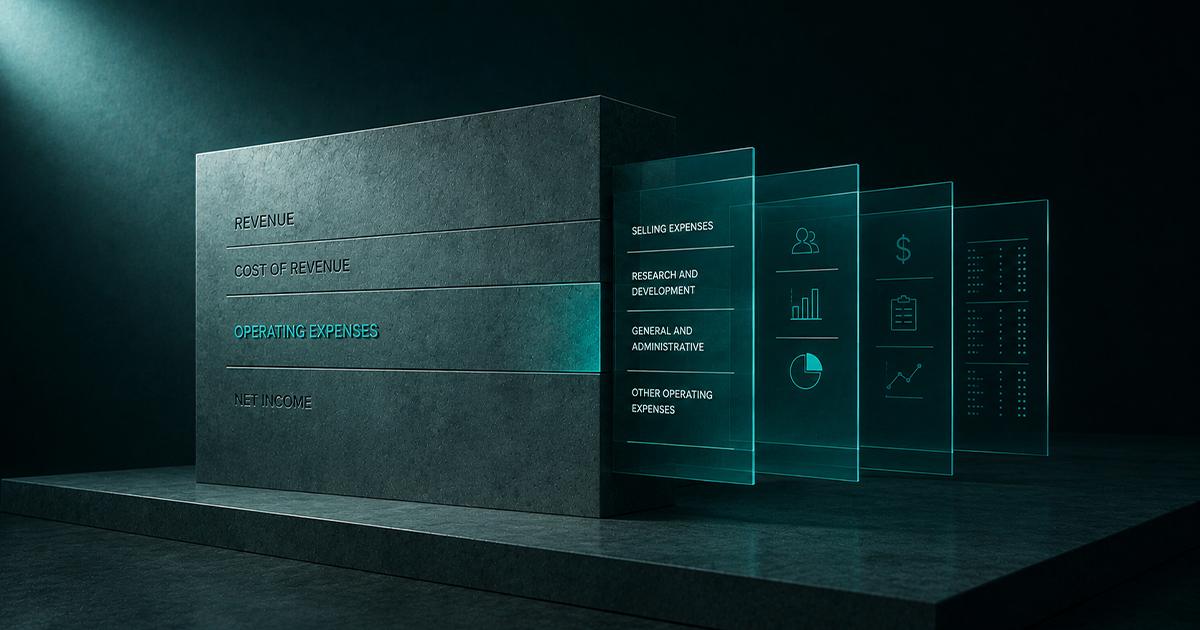
Financial reporting is changing. For years, investors have relied on income statements to understand a company’s performance. They can see revenue, operating expenses, and net income. What they often cannot see is what actually makes up those operating expenses.
That is one of the reasons the Financial Accounting Standards Board (FASB) issued Accounting Standards Update (ASU) 2024-03, Disaggregation of Income Statement Expenses (DISE). The new standard introduces additional disclosure requirements for public companies and is intended to give investors a clearer understanding of a company’s cost structure.
Although the income statement itself will look largely the same, the notes to the financial statements will become much more detailed.
What is ASU 2024-03?
ASU 2024-03 is a new accounting standard issued by the Financial Accounting Standards Board (FASB) that changes how public companies disclose operating expenses. Rather than introducing new accounting rules, it asks companies to provide more detail about the expenses already reported on their income statements.¹
For years, investors have seen broad line items like Selling, General and Administrative (SG&A) expenses or Cost of Sales without much visibility into what those balances actually include. ASU 2024-03 is intended to change that by requiring companies to break down those expense categories in the notes to the financial statements.
The important point is that the standard doesn’t change the numbers. It changes the level of detail behind them. By expanding expense disclosures, FASB aims to give investors a better understanding of a company’s cost structure and the factors influencing its financial performance.
Looking Beyond the Income Statement
One of the biggest changes introduced by ASU 2024-03 is that investors will no longer have to rely solely on broad expense totals to understand how a business operates.
Today, an income statement might show a single line for Selling, General and Administrative (SG&A) expenses or Cost of Sales. Those figures are useful, but they don’t explain what actually makes up those balances.
Under DISE reporting, companies will provide additional detail in the footnotes, breaking those broader expense captions into significant natural expense categories. Depending on the business, those disclosures may include:
- employee compensation
- inventory purchases
- depreciation
- amortization of intangible assets
- depletion
- selling expenses
- expense reimbursements
- significant operating costs
Companies will also need to explain what is included in any remaining “other” expense category. With the new disclosures, investors will have a better way of understanding a company’s cost structure, operating efficiency, and profitability.
Who Needs to Prepare?
Not every organization is affected by ASU 2024-03, but many finance professionals should already be thinking about it.
The standard primarily applies to public business entities (PBEs), including:
- SEC-registered public companies
- Companies preparing for an initial public offering (IPO)
- Controllers and chief financial officers (CFOs) responsible for SEC reporting
- Corporate accounting and financial reporting teams
- Audit committees and boards overseeing financial reporting
- External auditors supporting public company financial statements
Private companies, not-for-profit organizations, and employee benefit plans are currently outside the scope of the standard.
For most calendar-year public companies, the new disclosure requirements become effective for fiscal years beginning after December 15, 2026, with interim reporting requirements taking effect one year later. Early adoption is permitted.²
Even if your organization isn’t required to comply, the broader direction is worth watching. Investors, lenders, and buyers continue to expect greater transparency into operating expenses, and many private companies are already being asked for similar information during due diligence, financing, and acquisition discussions.
Why Preparation Starts Earlier Than You Think
The effective date may still be some time away, but preparing for DISE reporting should begin well before the first required filing. The biggest implementation challenge is making sure your systems and reporting processes can produce the required information accurately and consistently.
If you’re responsible for financial reporting, consider taking these steps early:
- Review your chart of accounts. Determine whether your current account structure can separately identify significant natural expense categories or whether additional accounts are needed.
- Evaluate your ERP and reporting systems. Confirm that your accounting software can generate the required disclosures without relying heavily on manual spreadsheets or offline calculations.
- Document expense allocation methodologies. Review how shared costs, such as payroll, occupancy, and IT expenses, are allocated across departments and ensure those methodologies are consistently applied.
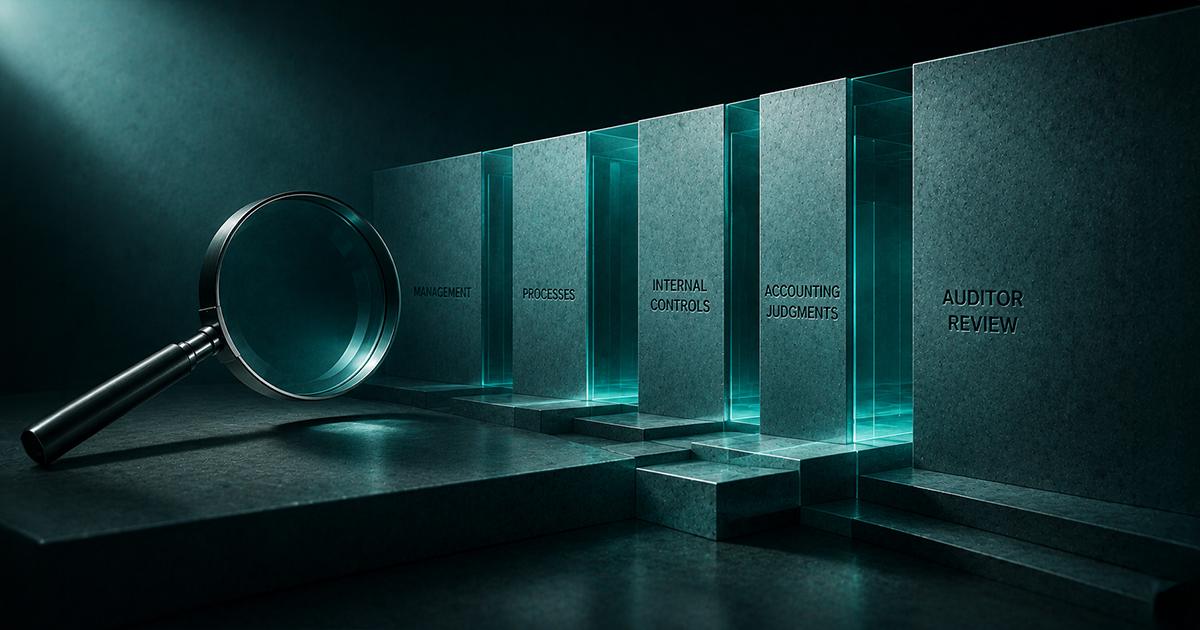
- Assess your internal controls. Evaluate the controls surrounding expense coding, account reconciliations, journal entries, and financial reporting to help ensure the information supporting DISE disclosures is accurate and complete.
- Coordinate across departments. Some of the required information may come from Human Resources, Operations, Procurement, or Information Technology rather than Finance alone. Establishing clear reporting responsibilities early can simplify implementation.
- Perform a trial run. Consider preparing a mock DISE disclosure using a recent reporting period. This can help identify reporting gaps, system limitations, and documentation issues before the standard becomes effective.
Organizations that begin preparing now will have more time to refine their processes, improve data quality, and integrate DISE reporting into their normal financial reporting cycle rather than treating it as a last-minute compliance exercise.
Beyond Compliance
It’s easy to view ASU 2024-03 as another accounting standard that adds new disclosure requirements. But that’s only part of the story.
The CFA Institute has long emphasized that transparent, decision-useful financial reporting is essential for informed investment decisions.³ DISE supports that goal by giving investors a clearer understanding of what is driving a company’s operating expenses, not just what the totals are.
For finance teams, that same information has value beyond external reporting. Breaking expenses into more meaningful categories can help management identify cost trends, evaluate operating efficiency, and make better decisions about where resources are being allocated. In that sense, DISE isn’t just changing what companies disclose. It encourages them to better understand their own business.
References
¹ Financial Accounting Standards Board (FASB), “FASB Issues Standard That Improves Disclosures about Income Statement Expenses,” November 4, 2024, https://www.fasb.org/news-and-meetings/in-the-news/fasb-issues-standard-that-improves-disclosures-about-income-statement-expenses-419833.
² U.S. Securities and Exchange Commission (SEC), Form 10-K, Note 16—Segment Reporting, EDGAR filing, accessed July 8, 2026, https://www.sec.gov/Archives/edgar/data/1361658/000136165826000027/R32.htm
³ CFA Institute. A Comprehensive Business Reporting Model: Financial Reporting for Investors. Charlottesville, VA: CFA Institute, 2007. https://rpc.cfainstitute.org/sites/default/files/-/media/documents/article/position-paper/comprehensive-business-reporting-model.pdf.
Author Bio
Gregory A. Wahl is a Certified Public Accountant (CPA) and the Founder of Wahl Street Accountancy Corporation. He writes about financial reporting, accounting standards, internal controls, and transaction readiness, with a focus on helping finance professionals better understand the practical impact of evolving accounting and regulatory requirements.