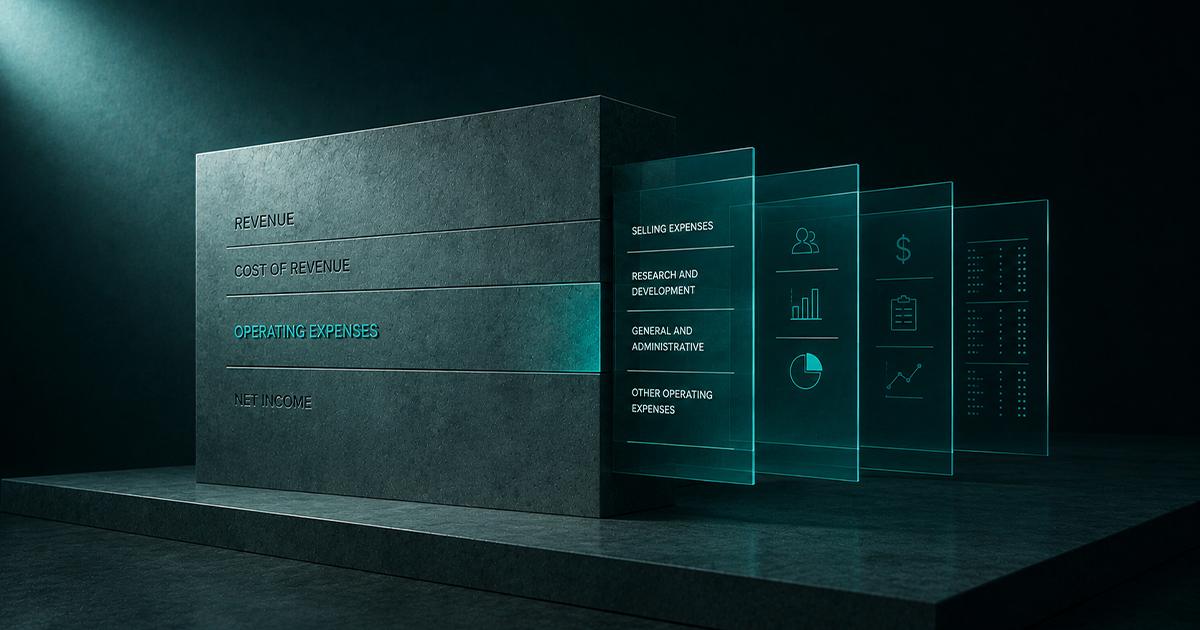
Periods of contraction rarely erase opportunity; they reprice it. For experienced owners, a downturn exposes the true architecture of a business: which parts generate enduring value and which rely on tailwinds that have now faded.
The most effective business growth strategies respond by reinforcing what endures, such as systems, margins, and decision frameworks, so every move made under pressure strengthens long-term positioning.

Compounding Through Constraints
Periods of pressure test the integrity of a business model. Growth in uncertainty starts with how owners interpret constraint. The best way to see it is as an audit of what truly drives return on effort and capital. When easy growth fades, margins reveal whether efficiency is designed or accidental.
Resilient operators go beyond cost control. They re-engineer their operating leverage, identifying where a 5% improvement in process flow or contract terms creates exponential value.
A logistics renegotiation that frees up working capital can cascade through procurement, inventory, and payroll. Streamlining software tools might not just save licensing fees but reclaim decision time, which is a scarce currency in turbulence. Even revisiting pricing architecture or bundling can uncover cross-subsidies that distort profitability.
These refinements, while incremental, are compounding assets. They accumulate structural strength that endures beyond the downturn, forming the quiet foundation of sustainable growth strategy: precision over expansion, design over momentum.
Diversifying Revenue Without Diluting Core Competence
Diversification protects revenue, but only when it reinforces what the company already does exceptionally well. The danger here is misalignment or pursuing growth that fractures operational focus or brand identity.
Experienced owners treat diversification as an adjacency exercise, not a pivot. They look for opportunities where the same infrastructure, expertise, or client relationships can be redeployed in a new configuration.
A construction firm expanding into facilities management, for instance, extends its value chain without retraining its culture. A SaaS provider layering analytics onto an existing platform monetizes data it already collects.
A capable business growth strategy consultant doesn’t suggest random expansion; they map competence against unmet demand, filtering ideas through scalability, capital intensity, and margin durability. True strategic business growth extends the core rather than escapes it, reinforcing credibility, not diffusing it.
Turning Cash Flow into Offensive Capital
Cash reserves represent stored opportunity. In a recession, liquidity is the ultimate optionality but only if owners deploy it with discipline. Sitting on idle cash erodes return; spending it indiscriminately erodes resilience. The art therefore lies in converting liquidity into controlled leverage.
Sophisticated operators treat capital allocation as a timing mechanism. They structure access before it’s needed, securing credit facilities or alternative financing when balance sheets are still strong.
During contraction, this foresight transforms cash into a competitive instrument: acquiring undervalued assets, absorbing specialized talent, or accelerating automation while competitors pause.
Every dollar must advance capability or reduce dependency. That’s how cash flow becomes offensive capital. Owners who master that distinction position themselves to lead when the cycle turns.
Institutionalizing Intelligence
Many mid-market companies still operate on founder intuition, which is a valuable trait until scale multiplies blind spots. Recessions magnify those gaps by compressing decision windows and amplifying consequences.
The solution is to convert knowledge into systems. Sophisticated business growth strategies institutionalize decision intelligence: integrated dashboards that tie performance metrics directly to capital allocation; forecasting models that test scenarios for margin compression or demand shocks; and leadership cadences that embed variance analysis into weekly reviews.
When insight becomes infrastructure, the company gains reflexes. Decisions accelerate without sacrificing accuracy, and leadership bandwidth expands. Over time, that institutional intelligence becomes a strategic moat. Competitors can imitate pricing, but not perception speed.
Reframing Customer Value as an Economic Hedge
In a downturn, markets sort themselves. Price-driven buyers contract; value-driven buyers consolidate. The opportunity is in understanding which clients see you as an expense and which see you as leverage.
Owners who analyze economic elasticity, or the sensitivity of their customer base to perceived value, can redeploy effort where loyalty compounds. This often leads to a refined service architecture: maintaining premium tiers for clients who equate reliability with ROI, while creating adaptive offerings for budget-constrained segments without eroding margins.
The result is a more predictable revenue mix and higher lifetime value per retained customer. It’s a market development growth strategy built on behavioral economics rather than broad marketing, turning client insight into a hedge against volatility.
Redesigning the Operating Core for Optionality
Sustained growth doesn’t demand expansion; it demands structural agility. During instability, the businesses that thrive are those designed to pivot quickly without incurring friction.
Redesigning for optionality starts with operational modularity. This means separating functions so one unit’s slowdown doesn’t ripple across the enterprise.
Fixed costs are re-examined through the lens of flexibility: which functions could shift to variable models via outsourcing, automation, or partnerships? Technology is evaluated not for trendiness but for its ability to multiply human capacity, giving leadership room to focus on strategy rather than firefighting.
When optionality is embedded, decision cycles shorten. You can test markets, reallocate labor, or repurpose assets without structural upheaval. Agility, properly engineered, becomes the most valuable form of capital in uncertain economies.
Rethinking Partnerships and Acquisitions as Market Instruments
Economic downturns reset the playing field not just through lower valuations but through shifting motivations. Competitors once inaccessible may now welcome alliances; suppliers may entertain equity stakes; talent may become available for acquisition.
Smart operators view this as a recalibration window. Instead of pursuing headline-grabbing mergers, they structure tactical partnerships that achieve strategic leverage with controlled risk. A minority acquisition might secure a critical distribution channel. A merger of equals can consolidate overhead and increase credibility. A joint venture allows entry into new regions while containing capital exposure.
These moves aren’t opportunistic; they’re architectural. Each is an instrument within a broader business growth strategy that expands influence, diversifies capability, and accelerates reach while maintaining governance control.
Planning for the Next Cycle, Not the Next Quarter
Owners who endure across decades share one trait: cyclical awareness. They view recessions not as anomalies but as recurring calibration points.
A forward-looking firm builds its plan across three synchronized horizons. The stability horizon preserves liquidity, debt discipline, and customer retention. The acceleration horizon identifies how the next growth wave will be captured, whether through strategic hires, new technologies, or re-positioned offerings. Finally, the legacy horizon ensures continuity of leadership, governance, and transferable enterprise value.
This architecture transforms growth from a seasonal sprint into a structural rhythm. The company stops reacting to markets and starts conducting them. This ultimately defines the true mark of long-term, recession-proof success.
Design Growth That Endures Every Cycle
Recession-proofing a business is an evolution in how strategy, capital, and leadership interact. The most successful owners build structures that adapt faster than markets shift, allowing growth to continue even when conditions tighten.